

Forklift Attachments

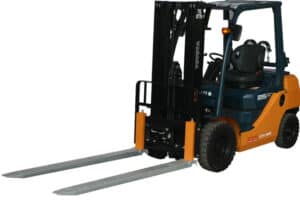
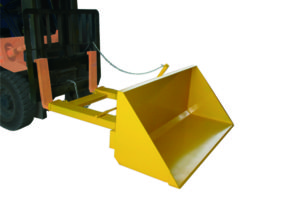
Bremco offers a wide range of Australian-made forklift attachments designed to improve safety, efficiency and versatility in industrial and warehousing environments. From forklift jibs, slippers and bin tippers to safety cages and custom-built solutions, all attachments are engineered to meet Australian Standards and suit demanding applications.

Australian made forklift and crane lift attachments
Proudly Australian Made
delivery icon
Australia-Wide Delivery
QAS LOGO ISO 9001 2
Built to Australian Standards

Latest News

Stay up to date on what the Bremco team has been working on and keep up with our industry’s latest news and insights.

Frequently Asked Questions

There are dozens of types of forklift attachments used in materials handling applications. The most common forklift attachments include:

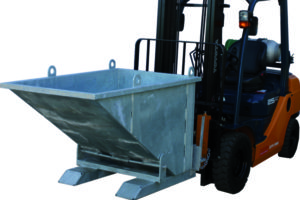
  • Forklift bins – These general-use attachments are ideal for lifting, transporting and handling all types of loose goods, such as small parts, gravel, rubbish, liquids and more.
  • Goods cages – Made with mesh sides, goods cages are suitable for lifting and handling loose parts and materials that don’t need solid sides.
  • Carpet poles – These poles make it easy to lift and handle any rolled material, such as carpet, fabric, turf and more.
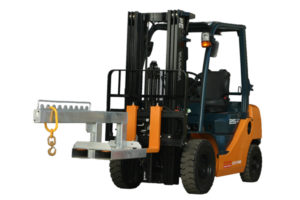
  • Jibs – Jibs can turn your forklift into a mini crane that’s capable of lifting anything with a secure attachment point, such as bulk handling bags.
  • Hoppers – Forklift hoppers are used to store, transport and disperse loose materials. They can be lifted by standard forklift tynes, making it easy to move loose products.
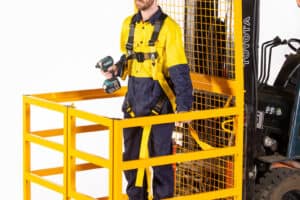
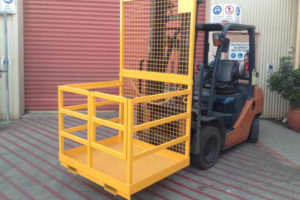
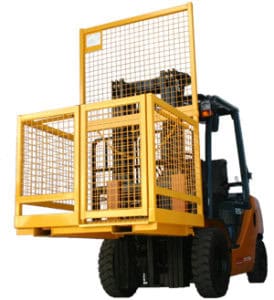
  • Man cages – Also called work platforms, forklift man cages can be used to lower and raise a worker, enabling them to safely perform work at heights.
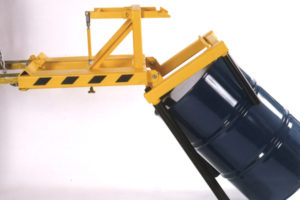
  • Drum and cylinder handlers – These attachments are used to handle drums and cylinders that contain liquids, gases and powders.

Forklift attachments affect a forklift by reducing its load capacity, and shifting the centre of gravity, making it less stable than it would be without the attachment. This is because forklift attachments add weight in front of the fulcrum point (the point or support on which a lever pivots). 

You can locate a forklift attachment’s load capacity information on its data plate. The data plate contains valuable details such as the model number, serial number, weight, and capacity of the attachment. In some cases, you may also find additional relevant information on the plate. If the attachment is missing a data plate, you can contact the manufacturer to obtain a replacement. To do this, you will need to provide them with the attachment’s serial number, typically stamped somewhere on the attachment’s body. Contact your forklift dealer to specify the attachment rating relative to your fork truck.

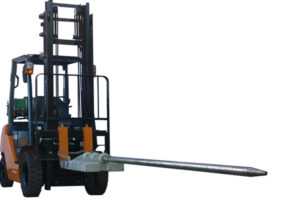
When selecting a forklift extension, consider:

  • The size and length of the extension. Forklift extensions should never exceed 167% of the length of the original forklift tynes.
  • Material quality – Use high quality steel extensions to ensure strength and durability for heavy duty lifting.
  • Safety features – ensure the attachments comes with safety features like locking pins or chains to secure the extension
  • Safety standard compliance – forklift extensions should meet Australian Standards, be loaded tested and have a compliance plate attached.

To determine a forklift’s new lifting capacity with an attachment, use the attachments load chart to find its capacity, then use the following formula. This formula accounts for the change in the load centre created by the attachment.

(Truck Capacity x Load Center) / (New Load Center) = Revised Capacity

In Australia, forklift manufacturers have a legal obligation to provide a forklift’s capacity rating on a compliance plate that is visible on the attachment. This plate is crucial for workplace safety as it provides the forklift’s maximum lift height, load capacity, and other specifications the operator is required to follow.

To ensure your forklift attachment is the correct size for your forklift:

  • Match your forklift attachments compatibility with your forklift specifications.
  • Consider the dimensions and maximum load weight
  • Ensure it can be safely mounted to your forklift
  • Ensure the attachment is appropriate for the specific forklift task
  • Verify the new load capacity with the forklift attached.

Always confirm the correct sizing with your forklift dealer.

To select a good forklift attachment manufacturer in Australia:


  • Choose a manufacturer who produces Australian made attachments
  • Look for manufacturers with a good reputation for safety and quality.
  • Ensure the manufacturer’s products meet Australian Standards.
  • Select a manufacturer who can provide expert advice and uses a reputable engineer to load test and certify their attachments.
  • Determine whether they manufacture products that are compatible with your forklift model and load capacity
  • Choose a manufacturer who provides compliance plates and other documentation on the attachment’s rated capacity and usage.
  • The attachment must be suitable for the forklift truck you are attaching it to.
  • The attachment must be suitable for the load you are lifting
  • It must have a suitable locking device and be properly attached to your forklift
  • The data compliance plate on an attachment should show the following:
    • Working load limit (WLL)
    • TARE weight
    • Model number / code
    • Horizontal centre of gravity (HCOG)
    • Vertical centre of gravity (VCOG)
    • Manufacture month and year, and job number